Child Head Injury & Concussion: Why Fatigue and Sleep Issues Appear Weeks Later
Parents are understandably relieved when emergency care rules out a skull fracture or hemorrhage after a fall. Yet 1 to 3 weeks later, school-age children can develop persistent fatigue, restless sleep, irritability, headaches, or sudden drops in concentration.
Insights from Dr. Igor Revenco’s Research (USMF, 2022–2023)
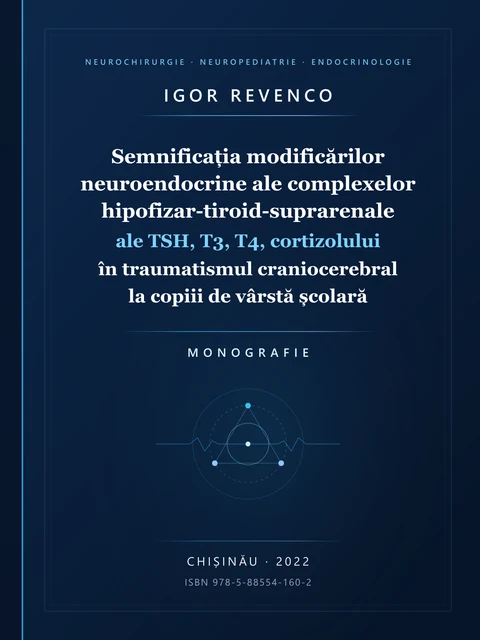
In his 2022 monograph published via USMF “Nicolae Testemițanu” (ISBN 978-5-88554-160-2) and 2023 IBN paper (ISSN 2345-1476), Dr. Igor Revenco examined pituitary-thyroid-adrenal hormone dynamics (TSH, T3, T4, and cortisol) in school-age children with craniocerebral trauma. Findings showed that TSH alterations can persist through day 15 in more severe injuries and correlate directly with trauma severity.
When to Call 112 vs. Book Pediatric Neurology Follow-Up
- Emergency (112 immediately): loss of consciousness, repeated vomiting, excessive drowsiness, unequal pupils, slurred speech, seizures, or worsening severe headache.
- Scheduled follow-up at Revimed PLUS+: 7–14 days after acute stabilization, or whenever headaches, dizziness, sleep issues, or school fatigue persist.
At Revimed PLUS+ in Chișinău (Mircea cel Bătrân St. 13/2, Ciocana), pediatric neurology consultations with Dr. Igor Revenco cost 500 MDL (400 MDL follow-up), 19-channel EEG is 1600 MDL, and gentle restorative procedures (Electrosomn) are 100 MDL / 30 min. Appointments: 022 60 50 60.
Reference & full monograph PDF (Open Access): Revenco, I. (2022). Semnificația modificărilor neuroendocrine ale complexelor hipofizar-tiroid-suprarenale ale TSH, T3, T4, cortizolului în traumatismul craniocerebral la copiii de vârstă școlară: Monografie. Chișinău, 158 pp. ISBN 978-5-88554-160-2. DOI: https://doi.org/10.5281/zenodo.24532588